The Beautiful Game's Universal Tongue
Picture this: you're in a packed bar in Tokyo, a fan park in Rio, or a living room in Cairo. The screen is alive with the green of the pitch and the vibrant colors of two national teams. The tension is palpable. A striker breaks through the defense, takes a shot... and GOAL! erupts from every corner of the room. That single English word, shouted in a thousand different accents, cuts through the noise. It’s a perfect, primal moment of shared understanding. This is the power of the World Cup, and this is the unique, unscripted role that English plays within it.
English, in the context of global football, is less about grammar textbooks and more about a shared emotional vocabulary. It’s the language of the stadium announcer, the international broadcast commentary, and the spontaneous celebrations between strangers. You don't need to be fluent; you just need to know the key phrases. The lexicon is short, powerful, and universally recognized: goal, penalty, offside, free kick, save, corner, referee, whistle, full time. These words are the building blocks of a global conversation that happens every four years.
More Than Just Rules: The Language of Shared Passion
But it goes deeper than the technical terms. English becomes the bridge for narratives and camaraderie. Think about the pundits. Whether it's a former English star on the BBC or a Brazilian legend analyzing on a global feed, they often pivot to English to explain a tactical nuance to an international audience. "They're playing a high line," "the midfield is being overrun," "that's a moment of individual brilliance." These insights are framed in English, making complex ideas accessible to millions.
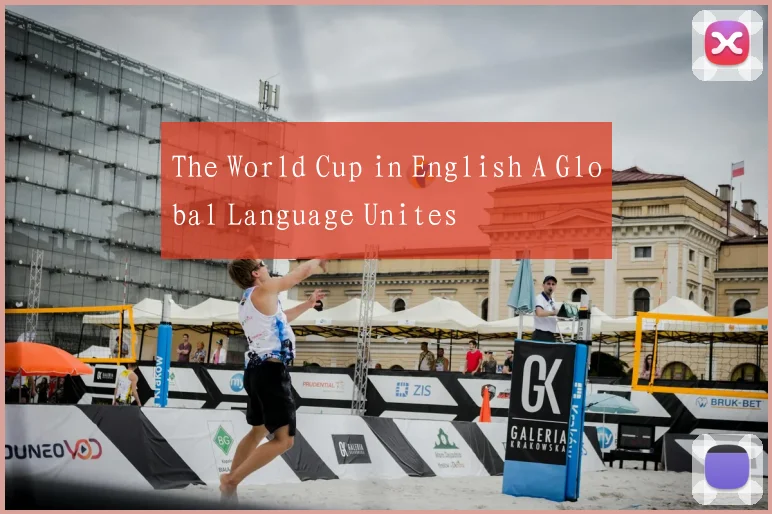
Then there's the fan interaction. A Peruvian and a German fan meet in a host city. Their native languages have no common root. But one points to a player and says, "He's amazing, isn't he?" The other grins and replies, "Unbelievable skill!" A conversation is born. They might stumble, use gestures, and mix in a few words from their own languages, but English provides the shaky yet effective scaffolding. It's the default setting for cross-cultural football banter, the grease that allows the gears of global fandom to turn smoothly.
The Players' Press Conference: A Global Stage
This linguistic phenomenon is perhaps most visible in the mandatory post-match press conferences. Here, players from across the planet sit before a sea of microphones from international media outlets. A South Korean defender, a Swiss midfielder, and a Senegalese forward will all, likely, field questions and give their answers in English. It's not always perfect. There might be hesitations, searches for the right word, or charmingly direct phrases. But that almost adds to the authenticity.
When a French star, in halting but determined English, credits his teammates for a win, or an Argentine goalkeeper expresses his disappointment, it feels raw and real. They are bypassing translators to speak directly to the world. In these moments, English isn't a symbol of cultural dominance; it's a practical, democratizing tool. It gives every player, regardless of nationality, a direct voice on the world's biggest sporting stage.
Controversies and Chants: The Lived Experience
Of course, the use of English isn't without its tensions or quirks. The official song of each tournament is almost always in English, which can sometimes feel commercially driven rather than organically global. Purists might argue it sidelines local linguistic cultures of the host nation. Yet, these anthems, from "Waka Waka" to "Wavin' Flag," become global hits precisely because their English choruses are singable for everyone.
And then there are the chants. While most supporter groups sing in their native tongues, certain English phrases have been adopted worldwide. The simple, rhythmic "Ole, ole, ole, ole!" is Spanish in origin, but its usage is global. The chant "You'll Never Walk Alone," immortalized by Liverpool FC, is now sung by fans from Germany to Japan in its original English. These phrases transcend their literal meaning and become sonic symbols of belonging and support.
A Language Forged in the Heat of Competition
So, what does this all mean? The World Cup doesn't promote English as the "best" language. Instead, it showcases English as football's functional lingua franca. It's the code that has emerged, somewhat organically, from over a century of international competition, media expansion, and fan migration. It's the language of convenience, connection, and collective emotion.
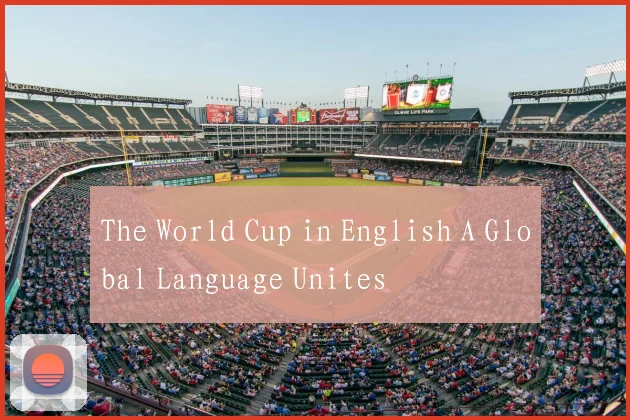
In the end, the true language of the World Cup is the game itself—the universal grammar of a perfectly weighted pass, a last-ditch tackle, or a goalkeeper's despairing dive. But English provides the commentary track. It's the shared dialect that allows a kid in Mumbai to debate the "GOAT" (Greatest Of All Time) with a fan in Montreal on social media. It lets a commentator in Doha describe a "stunning volley" to viewers in Nairobi. For one month every four years, this specialized, passionate, and deeply emotional version of English becomes the closest thing we have to a true global tongue, uniting us not in perfect syntax, but in perfect suspense, joy, and heartbreak.